How Professional Sewer & Storm Pipe Cleaning Works | 360 Pipes
How Professional Sewer and Storm Pipe Cleaning Works (and Why Method Matters)
Serving Northern California and surrounding areas | 360 Pipes
When a sewer or storm line backs up, surcharges, or simply hasn’t been serviced in years, the fix is rarely as simple as “run some water through it.” Professional pipe cleaning is a deliberate process — the right method, the right tool, and the right sequence for whatever has built up inside the pipe. Get it wrong and you can damage fragile pipe, push a blockage downstream, or leave defects hidden under debris. Get it right and you restore full flow, extend the life of the line, and set the stage for an accurate inspection.
Here’s a look at how the cleaning actually gets done, and why the method matters as much as the muscle.
Two families of cleaning: hydraulic and mechanical
Pipe cleaning methods fall into two broad categories.
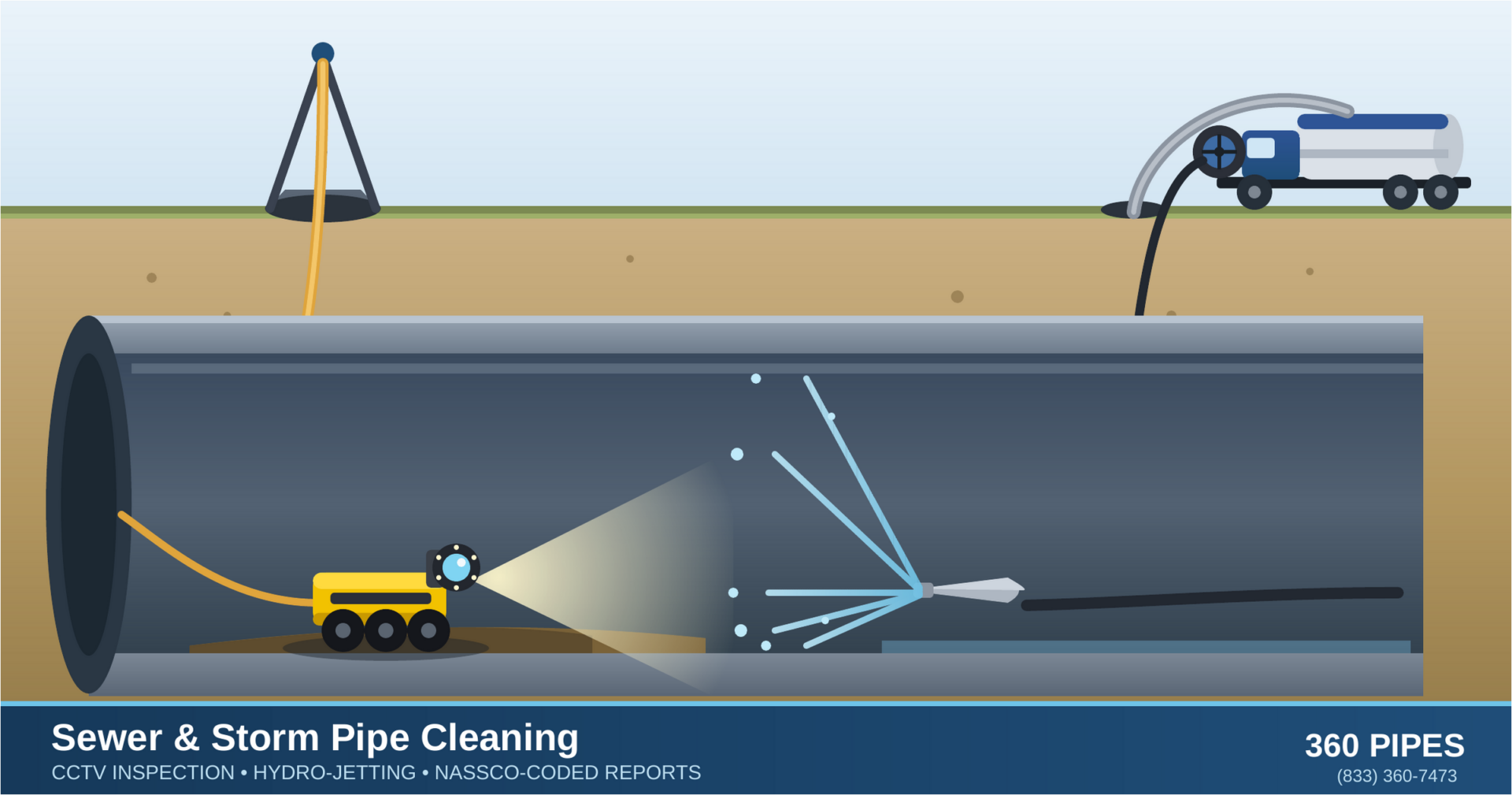
Hydraulic cleaning uses water and water velocity to do the work. The most common method is high-velocity hydro-jetting (also called jetting or flushing): a specialized nozzle on a high-pressure hose propels itself up the line, while angled rear jets scour the pipe walls and flush grease, sediment, and debris back to the downstream manhole for removal. It’s the workhorse for grease, sand, and general buildup.
Mechanical cleaning physically removes material. Rodding and bucket machines pull or cut heavy debris from the pipe, and root-cutting heads slice through root intrusion. Mechanical methods come into play when material is too dense or too solid for water alone.
A skilled crew often combines the two — for example, cutting roots mechanically, then jetting to flush the cuttings and scour the walls clean.
The right nozzle for the problem
Hydro-jetting isn’t one tool; it’s a toolbox. The nozzle is matched to what’s actually inside the pipe:
- Grease and fats: rotating nozzles that blast the full circumference of the pipe wall, breaking grease loose so it can be flushed away.
- Roots: rotating or chain-cutter nozzles that cut through intrusion — a reminder that roots usually point to a joint or crack that needs attention.
- Sand and sediment: high-flow flushing nozzles that move loose material along the bottom of the pipe and out.
- Heavy debris in large lines and storm drains: weighted nozzles that stay low in the pipe and drive material back toward the access point.
- Hardened scale, mineral deposits, or grout: specialized cutting nozzles built to break tough deposits off the wall.
Just as important as nozzle type is jet angle. Lower jet angles deliver thrust to drive the nozzle and move debris; higher angles deliver scouring power to clean the pipe wall. An experienced operator chooses the combination that fits the job — and always matches the nozzle and pressure to the pipe, because over-pressurizing fragile, old, or undersized pipe can cause real damage.
Step cleaning: how heavy buildup is handled
When a line is heavily loaded with grease, sand, or debris, trying to clean the whole length in a single pass is a mistake. It can bury the nozzle, overload the line, and push a growing slug of material downstream into a fresh blockage.
Instead, professionals use step cleaning — working the line in stages. The nozzle is advanced a controlled distance, then pulled back to draw the loosened material to the access point, where it’s vacuumed out before it can pile up. The crew advances a little farther on each pass, repeating the cycle until the full length runs clean. It’s slower and more methodical, but it protects the equipment, the pipe, and the rest of the system.
Why we clean before we inspect
One principle guides everything: you can’t assess a pipe you can’t see. Sediment, grease, and standing water hide cracks, offsets, and other defects from the camera. That’s why thorough cleaning comes before a CCTV inspection — so the camera captures a complete, accurate picture of the pipe’s true condition. Clean first, then inspect, then code the findings to the NASSCO standard so the results can be compared, prioritized, and acted on.
Cleaning the right way means doing it safely
Sewer and storm work happens in confined spaces, around traffic, and in contact with wastewater — so safe cleaning is professional cleaning. That means atmospheric testing and ventilation before any confined-space entry, proper traffic control around the work zone, and trained crews using the right protective equipment. High-pressure water is powerful enough to cause serious injury, so it demands respect and proper procedure every time. Working with a crew that takes these practices seriously protects your property, the public, and the people doing the work.
The bottom line
Effective pipe cleaning is equal parts equipment and expertise: knowing whether the problem calls for jetting or mechanical cutting, selecting the nozzle and angle that fit the material, stepping through heavy buildup instead of forcing it, and cleaning thoroughly enough that the follow-up inspection tells the whole story. That’s the difference between a pipe that’s truly clean and one that just looks clear for a week.
If you manage sewer or storm infrastructure in Northern California and want it cleaned, inspected, and documented the right way, 360 Pipes can help.
Call (833) 360-7473 or visit 360pipes.com to schedule service.